Monday, December 31, 2012

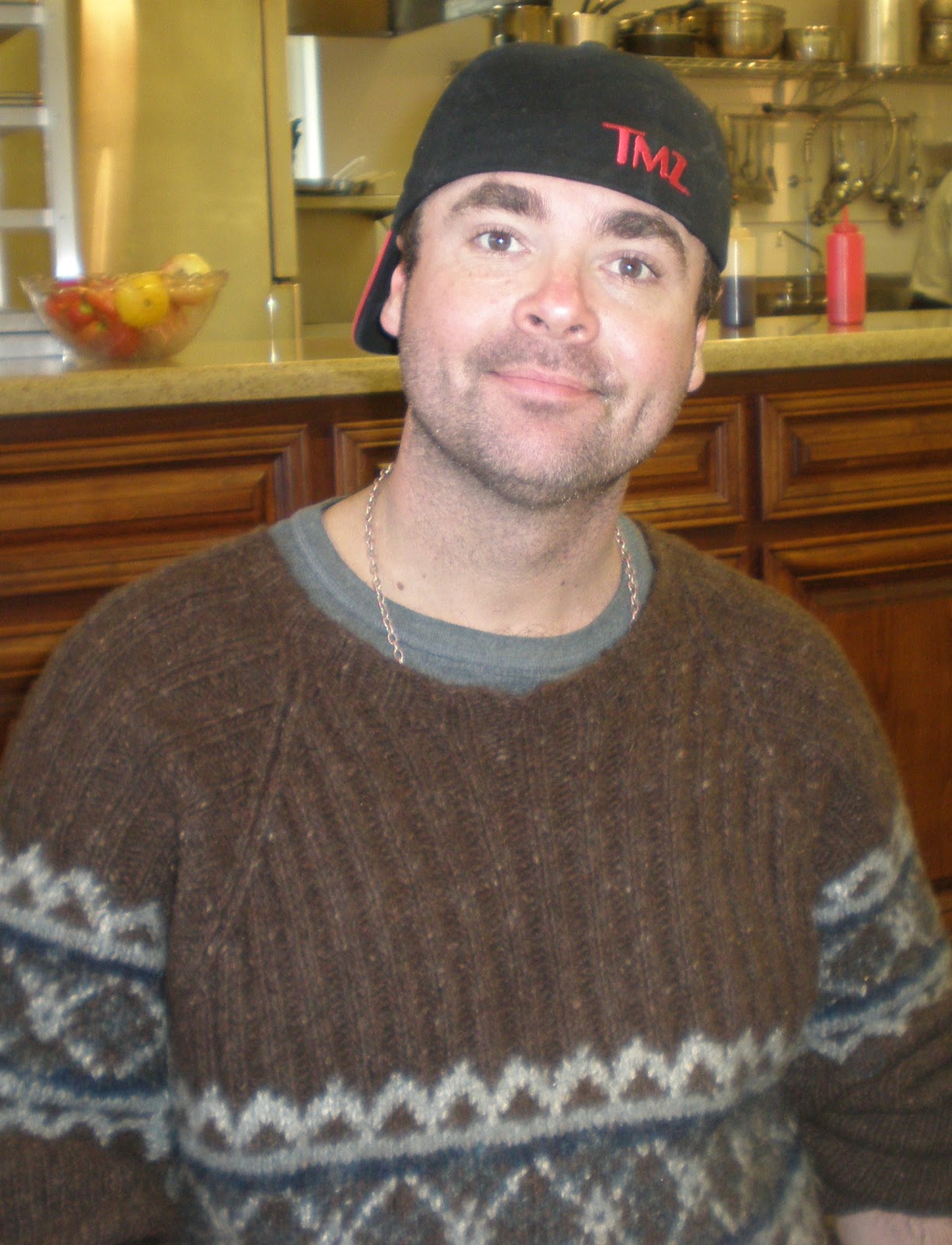
TIM MARVIN - "I'm a free-born, natural man.  I'm NOT a person."
A MAN MADE HOMELESS BY THE HATED TRAFFIC LIGHT CAMERAS

     Tim Marvin and his new traveling friend, Mark, tell me that it is no accident that these two Christian men have the names Mark and Timothy.
     Tim is single, has no children, and has never been married. He is 59 years old.
     It is December 29, 2012 when I ask Tim how long he has been homeless.
     He answers that yesterday was his first day of being homeless, this time.
     Tim has a 1988 Chevy Van that he uses to travel around to different construction jobs where he works. At times, he also lives in that van. But now, there is a big problem with Tim’s van.
     Last Summer, while Tim was traveling to Lake County to work on a construction job there, he apparently got hit with a traffic ticket from one of those new (and I argue un-Constitutional) traffic light cameras in Yuba County.
     Tim claims that he never received any notice that he had been given the traffic light ticket.
     It’s understandable that Tim never got any notice of the traffic ticket, given Tim’s wandering lifestyle.
     But now, Tim has received notice from the California Department of Motor Vehicles that his driver’s license has been suspended because of his failure to take care of the Yuba County traffic light ticket.
     Tim calls the suspension of his driver’s license without any prior notice a "Travesty of Justice."
     Now, for the first time in his life, Tim is forced to accept government assistance, in the form of food stamps, because he no longer has a means of transportation to get to work.
     At the time that Tim’s driver’s license was suspended because of an unpaid traffic light ticket, he had a completely clean DMV record.
     Because Tim can’t get to work, he has ended up jobless, and homeless.
     When I ask Tim what he is going to do next, he answers, "I don’t know."
     "It’s difficult, because the ticket was all the way down in Yuba County.
     "I avoided being homeless for a while by staying with my relatives. I’d spend a few days sleeping on the couch at one relative’s house, and then, I’d spend a few days at another relative’s house. But eventually, I wore out my welcome with all of my relatives. So, now, I’m homeless.
     "I talked to a lawyer about getting the traffic light ticket cleared up. But the lawyer wanted $400 to do that. I don’t have that kind of money.
     "I thought about trying to do the legal work myself, and to represent myself in court. But... the courts don’t have any respect for people who try to represent themselves.
     "I would like to find an attorney who could get this case dismissed, and get my license back, so that I can work again."
     I look at Tim, and I have to shake my head.
     I will try to find a lawyer who can help him with his unpaid traffic light ticket in Yuba County, but I don’t know many lawyers in Yuba County.
     In the mean time, here is one more example of a man who has been rendered homeless by corrupt California laws and incompetent or corrupt California legislators and judges.
     All it would take to put an end, once and for all, to these hated traffic light camera tickets, and the way that they are being used to gouge additional money from citizens for local governments and their private enterprise camera partners, would be for one judge to call these traffic light cameras what they really are...which is an unconstitutional.
     Charging an American Citizen with a crime without giving that citizen the right to confront and examine his accuser in court is a violation of one of our most basis and most important Constitutional rights.
     And yet, for whatever mysterious reason, we lack the judges with the Constitutional competence...or, the courage... to simply call these damned traffic light cameras what they really are.
     So now, Big Brother really is watching.
     And now that we have allowed our government to institute this form of Big Brother watching, it will grow into all other areas of our lives like an aggressive cancer.
     As for Tim’s loss of his license, and his resulting joblessness and homelessness, Tim says, "I’m not so angry about it, as much as I’m just in shock.
     "I’ve parked my van at my sister’s house, so that I don’t lose it to being impounded. And I’m out on the street.
     "It’s difficult for me to get around, and to get anything done, because I can’t get a free bus pass. And the buses around here don’t run very well anyway. I have to walk about ten miles a day just to do the things that I need to get done every day."
     If Tim had a magic wand, so that he could be or do absolutely anything, what would he be, or be doing?
     "I have this dream that I’ve had for many years," Tim says. "I’d find a piece of land in Nepal that had a hot springs on it, and that also had a view of the Himalayas. There, I’d build an orphanage, and a retreat center where people could come to find inner peace and healing.
     "I’m good at designing and building homes. So, I have all of the skills it would take to build an orphanage and a retreat center.
     "My lifestyle of being single has permitted me to do a lot of traveling, and to learn a lot of different construction skills.
     "I don’t consider myself unemployed. I work for a living. I just can’t get to any work right now."
     I ask Tim if he has a message for the world.
     He answers, "I guess I’d say something of inspiration that sets everybody right. I don’t know what that is. I guess I’d say, follow the message of Jesus."
     "I have a great hunger for knowledge. I’ve been called a walking encyclopedia, at times.
     "I have walked with paupers, and kings, and with Hollywood movie stars.
     "I’ve also spent weeks sleeping alone in the woods.
     "I would tell everyone to love knowledge, and to seek knowledge. For without knowledge, you and your people will perish.
     "I meet a lot of younger men, these days, who say, ‘I know what I know. And that’s all I need to know.’
     "That’s not a very healthy attitude toward learning. That kind of an attitude toward learning will cost those young men dearly."
     I ask Tim what he believes makes him special and unique in the world.
     "I am the first-born child, of the first-born child, of the first-born child for six generations," Tim says. "I am a free-born man of the soil.
     "I am NOT a person. You know why? Because a person, by law, is a corporation. And a corporation can be taxed. But a natural-born man cannot be taxed.
     "When Wesley Snipes went before the federal court for failure to pay his taxes, the federal judge asked him just one question. The judge asked him, ‘Are you a person?’
     "If Wesley Snipes would have answered no, then he would have gotten off. But as soon as Snipes answered that he was a person, then the court nailed him for all of those back taxes."
     Interesting legal theory that Tim has.
     It’s not a legal theory that I was taught in law school.
     But then again, I guess it makes about as much sense as allowing a camera to charge an American Citizen with a crime without giving that citizen any right to confront and examine his accuser in court.
     It certainly makes as much sense as suspending a citizen’s driver’s license without first making any proof that the citizen was ever given any notice of the traffic light camera ticket in the first place.
     But hey, when it comes down to generating a little extra income for municipalities to keep government bureaucrats fully employed, an American Citizen’s Constitutional rights are just a minor formality, right?
     Happy New Year... in the New America. Good luck. Happy Hiking.

     This is the one-hundred-and-thirteenth in a series of articles written about Auburn-area homeless people by local attorney, author, and Sierra College Instructor Bob Litchfield.

Sunday, December 30, 2012

MARK CHADWICK - Says being homeless is just a title.
"THIS IS THE WARMEST CITY I’VE BEEN IN."
 
     Mark Chadwick is interested that I’m writing a book. He says that he and his friend, Tim, are literal scholars.
     I ask him if he means literary scholars, and he says yes.
     I tell Mark that he sounds like he is highly educated, and I ask him if he has a college degree.
     He says, "No. I’m auto-pedantic."
     Mark Chadwick is forty-two years old. He has been homeless, this time, since 2009.   
     Prior to becoming homeless, Mark was doing contract work for the Department of Defense at Los Alamos.
     He lost his job. Then, he lost his house.
     "The housing bubble got me," he says. "That, and a little bit of cannabis."
     Mark just recently came to the Auburn area, coming here from Austin, Texas. He intends to mine for gold here.
     "This is not just a wild pipedream for me," he says. "I come from three generations of miners. I know how to mine."
     I tell Mark that he is one of the last four interviews that I need to do to finish the 100 interviews for my book.
     He grins. "As always, I’m just through the door."
     He tells me that just before I showed up, offering a twenty-dollar interview fee, he and his friend, Tim, had been worrying about how they were going to get a little bit of expense money to help them make it through the next day or two.
     What’s the hardest part about being homeless for Mark?
     "Terror of being arrested," he answers. "Incarceration is terrifying to me. I fear the police."
     I ask Mark if he has been arrested in the past.
     "I’ve been arrested once or twice in the past," he says. "But it was for minor things, and I was usually in and out in a day. They have always been easy on me, because I kept my mouth shut."
     My interview with Mark was on December 29th. So, I asked him what it was like to be out on the street during Christmas.
     "Actually, it wasn’t too bad," he answers. "I was fed. I was clothed. People were relatively nice to me.
     "This is the warmest city that I’ve been in during the past five years. And during those five years, I’ve traveled all over the country.
     "I’ve had a lot of short-term jobs as I traveled around. But the truth is that in my heart, I’ve felt homeless for the past fifteen years - every since we left New Mexico when I was seven years old."
     If Mark had a magic wand, so that he could be or do absolutely anything, what would he be, or be doing?
     "I’d be a miner somewhere... either out in the desert, on up in the high mountains."
     I ask Mark if he has a message for the world.
     "Yes," he says. "Wake up!
     "You did it all to yourself. Now, learn.
     "It’s not punishment. It’s just data.
     "We never complain while we’re happy," Mark says. "Except for the spoiled ones. That’s why we call them spoiled.
     "I just learned that. It took me a whole, long lifetime just to learn that much."
     I ask Mark what he believes makes him special and unique in the world.
     "I don’t want to say that I’m a messenger of God," Mark says, "But I am one of His messengers.
     "I’ve done a lot of reading. I’ve learned a lot. If other people want to hear it, I give it to them.
     "Anything that gives you pleasure comes at a price," he says.
     "I’m not really homeless," Mark says. "I was born here. I’m going to live here. I’m going to die here. This is my home.
     "The only thing about me and being homeless is the title. And there are plenty of my ancestors back in my family line who have lots of fancy titles. So, don’t try to tell me that a title means anything.
     "It’s beautiful here," Mark says. "But you know, you don’t get to really see it until you have to stop and really look at it."

     This is the one-hundred-and-twelfth in a series of articles about Auburn-area homeless people, written by local attorney, author, and Sierra College Instructor Bob Litchfield.

Tuesday, December 18, 2012

JASON FITZGERALD - Homeless, Car-less, Dog-less, and the victim of an unskilled photographer.

A MAN WITHOUT HIS DOG

     Jason Fitzgerald is twenty-three years old. He has been homeless for about a year.
     "I was living with my parents," Jason says. "But things got a little too crowded. So, my mom asked me to leave. There were seven of us living in a single-wide mobile home. So, it was pretty crowded.
     "But while I was growing up, there were seven of us living in a twenty-nine-foot fifth-wheel trailer. So, I was used to being crowded.
     "We all got along pretty good."
     I ask Jason what’s the hardest part about being homeless for him.
     "Giving up my dog," he answers.
     "I had my dog for about seven years. But he was just too old to live out here. So, I gave him to my mom. He’s living at my mom’s house now.
     "I had my dog out here with me for the first four months. I still had a car at that time, and my dog slept mostly in my car.
     "But then, the motor blew up. After that, I was on foot."
     This is a pattern that I have seen with a lot of homeless people. First, they lose their job. Then, they lose their home. After that, at least they still have their car to sleep in, for a while.
     But when their car breaks down, they cannot afford to pay for the repairs.
     So then, they end up at the final and worst stage of being homeless, which is being on foot.
     It seems to me that if we really wanted to help the poor and the homeless, we might set up some kind of program in which local volunteers... like maybe the auto mechanic shop at a local high school or college, made free or low-cost auto repairs for the needy.
     I know of at least one Auburn auto repair shop where the mechanics already do free or low-cost auto repairs for needy people. They even restore, and then give away an old car to a needy person, from time to time.
     But what they do is not a part of an organized program. It’s a thing that they can only afford to do from time to time, out of the goodness of their hearts.
     Without some kind of organized program, no single auto repair shop could meet all of the needs of Auburn’s poor, while California’s economy is more broken than a car with a blown engine.
     If Jason had a magic wand, so that he could be or do absolutely anything, what would he be, or do?
     "I’d make people treat everybody the way that I’d want to be treated... and not steal from everybody."
     I ask Jason if he has a message for the world.
     "Life can be great, if you don’t weaken. Don’t let the bad things in your life get you down."
     I ask Jason what he believes makes him special and unique in the world.
     "I’m a problem solver. I can figure out a solution to just about anything... at the drop of a hat."
     I ask Jason if there is anything else that he would like people to know.
     "Don’t judge me if you don’t know me," Jason says. "There are two sides to every story."

     This is the one-hundred-and-eleventh in a series of articles about Auburn-area homeless people, written by local attorney, author, and Sierra College Instructor Bob Litchfield.
TAMMY RODRIGUEZ - "My life is not really that bad.  I just don't have a roof."
A POWERFUL MESSAGE

     Tammy Rodriguez is David Elliott’s girlfriend. She is thirty-seven years old.
     David is only twenty-four.
     But they are both old souls.
     They are wiser than most other people that I’ve met. And when I say that, I’m not just talking about the homeless people I’ve met. I’m talking about everybody I’ve met.
     Tammy has been homeless for about seven months.
     I interviewed Tammy’s boyfriend, David, just before interviewing Tammy. So I knew that Tammy and David both became homeless at the same time.
     I told Tammy that I have interviewed a number of homeless women who voluntarily became homeless to follow their boyfriends out onto the streets when their boyfriends became homeless.
     But Tammy tells me that is not what happened in her case.
     She didn’t follow David into homelessness. In fact, it was David who followed Tammy into homelessness.
     Tammy had been in an abusive relationship with another man. She became homeless when she left that abusive relationship.
     When Tammy left the abusive man and became homeless, David followed her into homelessness.
     I ask Tammy what is the hardest part about being homeless for her.
     "Not being able to spend more time with my daughter," she says.
     Tammy has a twelve-year-old daughter, who lives with her father.
     I ask Tammy if her daughter’s father is the same man who had been abusive to Tammy.
Tammy tells me no. The abusive relationship that she was in was with a different man, and occurred after she separated from her daughter’s father.
     "I see my daughter all the time," Tammy says. "But not as much as I’d like."
     Tammy tells me that she and David have been friends for about five years.
     I ask Tammy if it is difficult to hold a romantic relationship together, while struggling to survive all of the stresses of being homeless.
     Tammy says, "Not really. Once you accept the fact that you’re homeless, it’s not as hard."
     If Tammy had a magic wand, so that she could be or do absolutely anything, what would she be, or be doing?
     "Just a job," Tammy says. "Any job.
     "I’d like to be working.
     "I’ve done fast food, or retail in the past."
     But... if Tammy could have her choice of any kind of work, what kind of work would she prefer to be doing?
     "I’d be working with people who have psychiatric problems," she says.
     Why people who have psychiatric problems?
     "Because, even when my life seems bad, there’s always someone else who has it worse.
     "My own life is not really that bad. I just don’t have a roof."
     I ask Tammy if she has a message for the world.
     "Stop feeling sorry for yourself," Tammy says.
     I wait for a moment, to see if Tammy has anything more to add to that.
     She says nothing more.
     "That’s a very powerful statement," I tell her. "I don’t think that I’ve heard a statement like that from any other homeless person that I’ve interviewed. And it seems to me to be a statement that everyone needs to hear."
     I am thinking about all of the bitching and whining and moaning that I have been hearing, lately, (not just from my homeless friends, but from nearly everyone around me) and I can’t help wondering how two people like David and Tammy, who have such powerful positive attitudes, can end up being homeless.
     I tell Tammy that I have a great deal of admiration for her, and for the powerful things that she says.
     Tammy smiles. "Well, as I got older, I gained some wisdom.
     "Being out there, I’ve seen a lot of people crying and whining about it. And when you’re just crying and whining about it, nothing’s going to get done.
     "You know, the day’s going to end, and everything will still be the same, unless you actually do something."
     I ask Tammy if there is anything else that she wants people to know, before we complete our interview.
     "They shouldn’t look at all homeless people as bad," she says.
     "Homeless doesn’t mean that we are not human."

     This is the one-hundred-and-tenth article in a series of articles about Auburn-area homeless people, written by local attorney, author, and Sierra College Instructor Bob Litchfield.

Monday, December 17, 2012

DAVID ELLIOTT - "The World is What You Make of It."
TWO HOMELESS LOVERS WITH A DIFFERENT PHILOSOPHY

     David Elliott is twenty-four years old, and has been homeless for about seven months, this time. Actually, he’s been homeless, off and on, for about the past two and a half years.
     This last time, he became homeless after he was released from jail. When I ask him what he was in jail for, he volunteers only that he got picked up on a warrant.
     David has family in the Reno area. But he wanted to stay in the Auburn area because this is where is girlfriend lives. His girlfriend is Tammy Rodriguez, whom I interviewed next.
     When I ask David what is the hardest part about being homeless for him, he answers, "Being out here with a girlfriend, and making sure that she gets fed every night."
     "Also, keeping all of our stuff together, and not getting ripped off. This last week, we went out of town for a couple of days. When we got back, all of our stuff had been stolen. We lost two sleeping bags, and a lot of good stuff."
     "We’re not drinkers," David adds. "So, we don’t hang around with a lot of the other homeless people. We try to keep mostly to ourselves. That way, we also avoid any run-ins with the cops.
     "I try to earn money any way that I can," David says. "I do it the right way."
     If David had a magic wand, so that he could be or do absolutely anything, what would he be, or be doing?
     "I’d own my own business," David says. "I like doing tree work, so it would probably be a tree maintenance service. Or, maybe an all-around maintenance kind of business. Because I’m kind of an all-around maintenance guy."
     Does David have a message for the world?
     "I don’t know," David says. "I think that the world is fair.
     "It’s what you make of it.
     "If more people lived by that, then the world would be a better place.
     As David is talking, I am taking notes. But my ball-point pen runs dry.
     I reach into my pocket to pull out the spare pen that I always carry me when I go out to do interviews. But I feel pretty dumb when I realize that on this day, I have left my spare pen at home.
     I tell David that my first interview of the day may have to be my last, and I may not be able to complete the interview, because I have forgotten to bring a spare pen.
     A homeless woman by the name of Vicky is sitting nearby. When she hears me say this, she reaches into her backpack, pulls out a ball-point pen, and kindly hands it to me.
     I thank her, and continue the interview.
     It feels a little strange... finding myself in a position where one of the homeless people is helping me out, instead of the other way around.
     And yet, there is also something about being in that position that feels right.
     I am very grateful to Vicky for bailing me out.
     She knows it. And she feels good about it.
     After I think about it for a moment, so do I.
     I tell David about my belief that each and every person who is born into this world is born with something about him or her that makes him or her special and unique. I ask him what he believes makes him special and unique in the world.
     "My ability to help others in any way that I can," David says. "Even in this position of being homeless, when I see an opportunity to help someone else, I do it.
     "Even though I’m homeless, whenever I am able to earn a few bucks, I send half of it to my mom.
     "I have a soft heart.
     I ask David if there is anything else that he wants people to know, before we complete the interview.
    "All homeless people aren’t the same," he says. "There are those out here who are trying to do what’s right.
     "We’re not all drunks.
     "There are a lot of good people out here."

     This is the one-hundred-and-ninth in a series of articles written about Auburn-area homeless people by local attorney, author, and Sierra College Instructor Bob Litchfield.

Wednesday, December 12, 2012

SCOTT ENGLISH - After a night of sleeping on a concrete slab in the freezing cold.
CLEAN AND SOBER FOR THREE DAYS

     I met Scott English and his girlfriend on a cold winter morning, after they’ve had a rough night. The ground outside was still wet from several days of heavy rain. But on that Friday Night, the sky cleared, and it got very cold.
     In order to prevent the ground moisture from soaking their sleeping bags, Scott and his girlfriend spent the night trying to sleep on a concrete slab, in the freezing cold.
     From the way that they looked on Saturday Morning, I don’t think either one of them had gotten much sleep.
     Scott is thirty-nine years old, but he looks younger than that. Although he was somewhat haggard on that morning, he is actually a very handsome man. He is an eloquent speaker, and very intelligent.
     When you talk to him, his facial expressions remind you of a famous actor. But that actor is not famous enough for me to remember his name.
     Scott tells me that he has been homeless for most of the past twenty-three years.
     He first became homeless by choice. He was tired of dealing with a working man’s life.
     "Back then," he says, "The economy was way better. And people just gave you money. So, I could get enough money to get drunk when ever I wanted, and I didn’t have to work to pay for the alcohol. So, for me, being homeless was great.
     "But that was a different time. Nowadays, being homeless is not so great."
     What is the hardest part about being homeless for Scott?
     "Staying sober. I’ve done a lot of drinking, and I’ve also done all kinds of drugs. But alcohol is my drug of choice.
     "Right now, I’ve got three days of being clean and sober.
     "I’d like to stay that way. But it’s really hard.
     "Like today, I am really wanting to drink."
     I ask Scott if he’s tried going to AA meetings, or getting into some kind of rehabilitation program.
     "Oh, yes. I’ve been to A.O.D (which I later learned stands for Alcohol Outpatient Drugs).
But all they do is tell you, go here, and then, go there. Those government employees get paid to run you around. It’s all just a big run around. It’s all B.S.
     "And by the way, the worst possible thing that you can do for a homeless person is to give him money. Because, most of the time, they use the money to buy drugs or alcohol.
     "So, the money that you give them feeds their addiction.
     "And if you keep feeding their addiction long enough, it just gets worse and worse, until eventually, they get crazy, and they hurt people to get what they need."
     If Scott had a magic wand, so that he could be or do absolutely anything, what he be or do?
     "I would help out at a homeless shelter," Scott answers. "I want to help people who are in my position."
     I ask Scott if he has a message for the world.
     "Repent, or perish," Scott says. "One of these days, I’m going to get myself a big, wooden cross, and a long, white robe, and I’m going to carry that cross around, with a big sign that says, ‘Repent, or perish."
I ask Scott what he believes makes him special and unique in the world.
     "I know how to play a guitar for God," Scott says.
     "And I’m good at loving the loveless. Because I’ve been loveless a whole lot.
     "Jesus.
     "That’s it.
     "That’s all of it.
     "Just Jesus, and my Baby." He looks at his girlfriend, and smiles.
     Scott’s girlfriend, having just spent the night sleeping on a concrete slab in the freezing cold winter night, is feeling so poorly that she doesn’t feel up to doing an interview.
     Near the end of my interview with Scott, he says something about learning to live by faith that is so brilliant, and so eloquently stated that I can’t get it all written down.
     Instead, I tell Scott that while I was listening to him, I was wishing that I could speak that eloquently myself.
     I tell Scott that he is one of the most brilliant and eloquent men that I have ever encountered. I tell him that he has the power to make a positive difference in the lives of a lot of people. And if he doesn’t stay sober, and use his God-given talent to help other people, it will be a tragedy.
     "I fully intend to do just that," Scott says.
     Pastor Dan Appel comes in, and tells Scott about the new recovery program that the Seventh Day Adventist Church is holding at two o’clock on Saturday Afternoons. We ask Scott to come to the two o’clock meeting.
     Scott says that he and his girlfriend will be there.
    But, as it so often occurs in these kinds of stories, two o’clock on that Saturday Afternoon comes and goes, and this brilliant young alcoholic never shows up.

     This is the one-hundred-and-eighth in a series of articles about Auburn-area homeless people, written by local attorney, author, and Sierra College Instructor Bob Litchfield.
SELENA-ROSE LUCETI-HERNANDEZ  -  "It's not glamorous being homeless."
ABANDONED AT THE BUS STATION

     Selena-Rose Luceti-Hernandez is twenty years old. She has been homeless for about six months now.
     Selena-Rose first became homeless when she decided to leave home and move down to Paso Robles with her boyfriend.
     But by the time they got to Paso Robles, her boyfriend had changed his mind about wanting to be with her. So, he left her at the bus station.
     She was stuck in Paso Robles until she was able to get enough money sent to her by her grandfather so that she could travel.
     In the mean time, she was broke, and homeless.
     There was a homeless man in Paso Robles, named Tim the Sailor, who helped Selena-Rose learn the ropes when she was first homeless. Selena-Rose says that Tim the Sailor treated her like she was his own daughter.
     She was stuck in Paso Robles for about two weeks.
     Then, she went up to Yuba City, trying to get into a shelter there. She needed to get into a shelter because her mother was not yet ready to take her back.
     Her best friend’s father gave her a ride to the Auburn area, so that she could get temporary shelter at The Gathering Inn.
     Guests of The Gathering Inn are only allowed to stay with The Gathering Inn at night for six months.
     When Selena-Rose had used up all of her six months of sleeping at The Gathering Inn, she was back out on the streets.
     From mid-July to early November, Selena-Rose slept in her mother’s garage. She was forced to sleep in the garage because her mother’s landlord would not allow Selena-Rose to move back into her mother’s house until her mother was able to come up with enough additional rent money to pay for the additional tenant.
     Selena-Rose finally got back into her mother’s home. But she has to pay a part of the rent.
     It’s difficult for Selena-Rose to come up with her share of the rent, because she is disabled. She has Rheumatoid Arthritis in her back and neck. She also has mental disorders.
     When I ask Selena-Rose if she is on medications, she says, "I only take the medications that are for the worst of the things that I have. I take the medications for my bi-polar, and for my depression. But I also have Asberger’s, and Turret’s Syndrome.
     I ask Selena-Rose if she was able to get her medications while she was homeless.
     "Well, I was on Medi-Cal," she answers. "So, I was able to get my medications. But I had trouble scheduling doctor’s appointments, because I don’t have a cell phone, and I couldn’t make the calls, and then get a call-back."
     What is the hardest thing about being homeless for Selena-Rose?
     "Getting food," she says. "Even when you can get to a food closet, you can only carry so much food. And a lot of times, that food is perishable. So, it doesn’t last very long.
     "Food stamps don’t buy much. One time, we calculated it out, and the value of the food stamps that you get for a month, if you divide it by the number of days in the month, comes out to about $6.25 per day. That’s doesn’t buy you enough food for one meal a day.
     "Another hard thing is trying to stay cool in the heat of Summer, and trying to stay warm in the Winter."
If Selena-Rose had a magic wand, so that she could be or do absolutely anything, what would she be doing?
     "I’d open up a shelter for the homeless. And it would be open to all homeless people, no matter what kind. Alcoholics would be welcome, drug addicts would be welcome, and stray animals too. Because I love animals. I want to become a Veterinary Technician someday.
     "In this shelter, there would be some real rehabilitation programs, too. There would be programs that really work for people... to help them get off of drugs and alcohol.
     "It wouldn’t be a place like The Gathering Inn. There would be no time limit on how long you could stay there.
     "And it wouldn’t involve getting dragged around from one church to another, night after night, like The Gathering Inn. It would be a permanent shelter, in a permanent building. And it would have a kitchen in it, so that we could feed people."
     Selena-Rose says that she grew up in the Bay Area, and there were a lot of homeless people down there. It really made her sad, because she couldn’t help them.
     Selena-Rose says that her dad was an alcoholic, and a drug abuser.
     Her mom only had Selena-Rose on certain days of the week, because she was working and going to school at the same time.
     On the other days, Selena-Rose stayed with her grandmother. Her grandmother was really nice. But she was also a binge drinker.
     When Selena-Rose was six years old, her grandmother died.
     Her grandfather, who was a dentist, remarried when Selena-Rose was eight.
     Selena-Rose says that her uncle owned Luceti’s Restaurant, a well-known Italian restaurant in the Bay Area. She says that all of the recipes used in the restaurant are her great-grandmother’s recipes.
     I ask Selena-Rose if she has a message for the world.
     "People need to treat others the way that they’d like to be treated.
     "We don’t treat the people we love like we love them.
     "And also, we need to treat this world with love and respect. Because it’s the only one that we have.
     "I’m the nicest person you’ll ever meet, unless you piss me off."
     I ask Selena-Rose what she believes makes her special and unique in the world.
     "It’s really hard for me to hate," she answers. "I should hate a lot of people. But I can’t. I should hate my ex-boyfriend who left me at the bus station. But I don’t.
     Selena-Rose has a new boyfriend now. He is sitting with her, and he seems like a nice young man. He and Selena have been friends for quite some time. But they’ve only been romantically involved for about three days
     "It’s not glamorous being homeless, like some people say," Selena-Rose says.
     "It’s really a struggle.
     "Just trying to stay out of trouble is a real struggle.
     "If you go to the hospital, they treat you badly. They treat you differently at the hospital, if they know that you’re homeless. They are rude.
     "One other thing that I’d tell people is, don’t go to Colfax.
     "I’ve lived there.
     "They do meth in the middle of the town, in Colfax.
     "The cops come by right while people are smoking it, and they don’t even care.
     "Sometimes, the homeless people break into the old school up there, and stay inside. And the cops don’t even bother to run them out."

     This is the one-hundred-and-seventh in a series of articles about Auburn-area homeless people, written by local attorney, author, and Sierra College Instructor Bob Litchfield.